

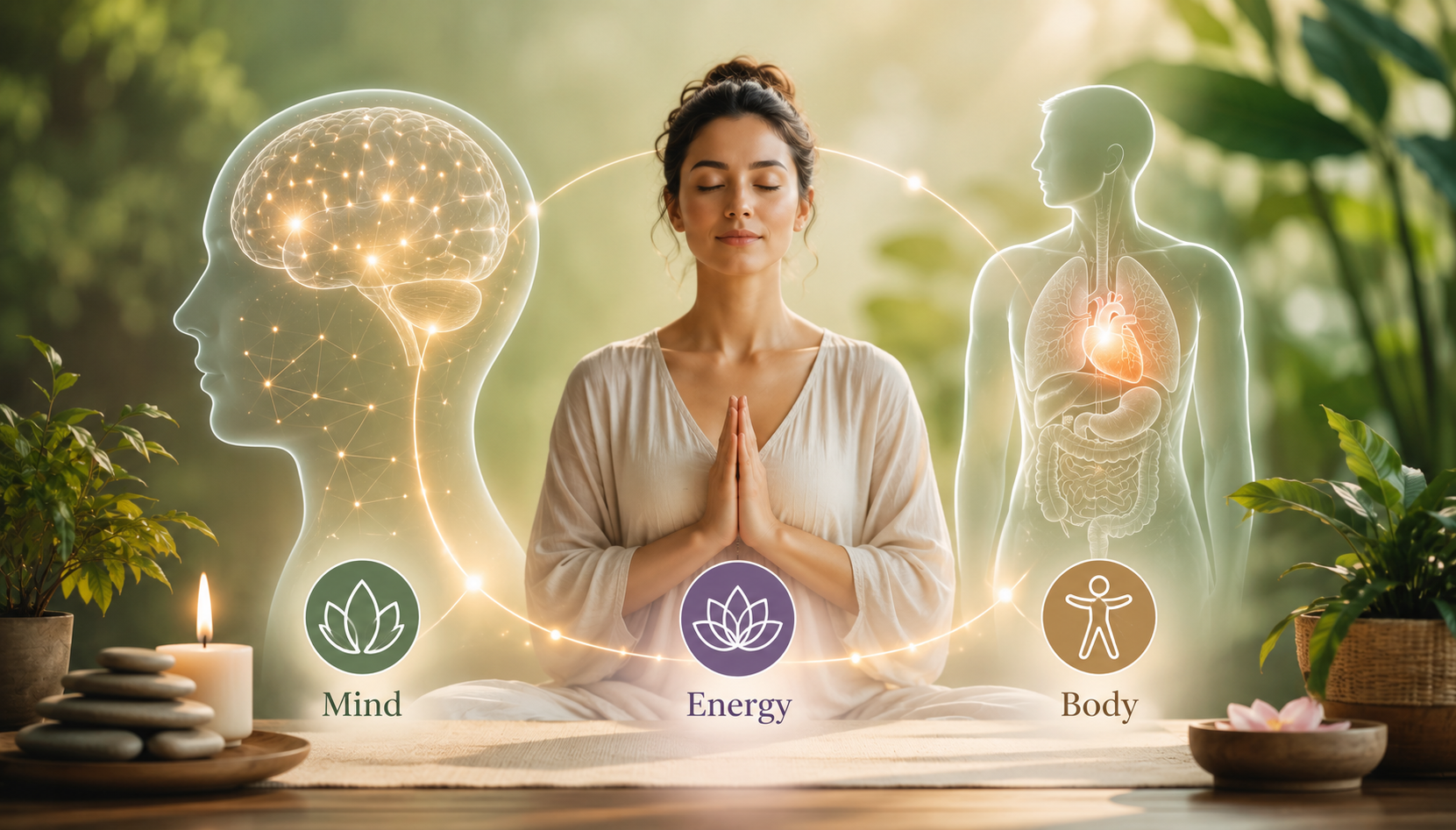
Have you ever noticed that stress can cause headaches, anxiety can upset your stomach, or emotional pain can leave you feeling physically exhausted? These experiences are not coincidental. They are powerful examples of the mind-body connection—a relationship that influences every aspect of our health and wellbeing.
For centuries, ancient healing traditions have recognized that the mind, body, and spirit are deeply interconnected. Today, modern science is increasingly validating what holistic practitioners have long understood: our thoughts, emotions, beliefs, and physical health continuously influence one another.
Understanding this connection is the foundation of holistic healing and can open the door to profound transformation, emotional balance, and overall wellbeing.
What is the Mind-Body Connection?
The mind-body connection refers to the relationship between our mental and emotional states and our physical health. Our thoughts, feelings, beliefs, and attitudes can positively or negatively affect biological functioning.
When we experience emotions such as joy, gratitude, love, and peace, our body responds with relaxation and balance. Conversely, when we experience prolonged stress, fear, anger, guilt, or sadness, our body often reacts with tension, inflammation, fatigue, and other physical symptoms.
The mind and body are not separate systems. They are constantly communicating through hormones, neurotransmitters, the nervous system, and energy pathways.
How Emotions Affect Physical Health
Emotions are not just experiences in the mind; they create real physiological changes within the body.
The Impact of Stress
Stress activates the body's "fight or flight" response. During stressful situations, the body releases hormones such as cortisol and adrenaline.
While this response is useful in emergencies, chronic stress can contribute to:
- Headaches and migraines
- High blood pressure
- Digestive problems
- Muscle tension
- Sleep disturbances
- Weakened immunity
- Fatigue and burnout
Over time, unresolved stress can significantly affect both physical and mental health.
Anxiety and the Body
Anxiety often manifests physically before we consciously recognize it emotionally.
Common physical symptoms of anxiety include:
- Rapid heartbeat
- Shortness of breath
- Dizziness
- Stomach discomfort
- Excessive sweating
- Restlessness
- Difficulty sleeping
Many individuals seek treatment for physical symptoms without realizing that emotional distress may be contributing to their discomfort.
Emotional Trauma and Chronic Health Issues
Unresolved emotional trauma can remain stored within the body for years. Experiences such as childhood neglect, abuse, rejection, loss, or relationship trauma may continue to affect emotional and physical wellbeing long after the event has passed.
Research increasingly suggests that chronic emotional stress may contribute to conditions such as:
- Chronic pain
- Autoimmune disorders
- Digestive disturbances
- Fatigue syndromes
- Sleep disorders
- Anxiety and depression
Healing often requires addressing both the emotional and physical aspects of these experiences.
The Role of Subconscious Beliefs in Health and Wellbeing
Many of our behaviors, emotional reactions, and life patterns are driven by subconscious beliefs that operate beneath conscious awareness.
The subconscious mind stores memories, experiences, emotions, and beliefs developed throughout life, especially during childhood.
Examples of limiting subconscious beliefs include:
- "I am not good enough."
- "I don't deserve happiness."
- "People will always hurt me."
- "I must be perfect to be accepted."
- "My needs don't matter."
These beliefs can influence:
- Self-esteem
- Relationships
- Decision-making
- Emotional reactions
- Stress responses
- Physical health
For example, someone who subconsciously believes they must constantly prove their worth may experience chronic stress, overwork, and eventual burnout.
Similarly, unresolved emotional wounds may create patterns of anxiety, fear, self-sabotage, or unhealthy relationships.
Because subconscious beliefs operate automatically, many people remain unaware of how strongly these internal programs affect their lives.
How Holistic Healing Addresses the Root Cause
Traditional approaches often focus primarily on managing symptoms. Holistic healing seeks to understand and address the deeper causes of emotional, mental, physical, and energetic imbalance.
Rather than asking, "What symptom needs to be fixed?" holistic healing asks:
- What is this symptom trying to communicate?
- What emotional patterns may be contributing?
- Are there unresolved experiences requiring attention?
- What beliefs are influencing current behavior?
- How can balance be restored on all levels?
This comprehensive perspective creates opportunities for deeper and more lasting healing.
Healing Through Mind, Body, and Energy Alignment
True healing occurs when the mind, body, and energy system work in harmony.
Mental Alignment
Mental alignment involves becoming aware of thoughts, beliefs, and internal narratives that shape our experiences.
Practices that support mental alignment include:
- Counselling and psychotherapy
- Cognitive restructuring
- Journaling
- Mindfulness practices
- Positive affirmations
- Hypnotherapy
Emotional Healing
Emotional healing focuses on processing and releasing unresolved emotions in a healthy manner.
This may involve:
- Trauma-informed therapy
- Emotional expression
- Inner child healing
- Forgiveness work
- Self-compassion practices
- Relationship healing
When emotions are acknowledged rather than suppressed, healing can begin naturally.
Physical Wellbeing
The body requires proper care to support emotional and mental health.
Important aspects include:
- Quality sleep
- Nutritious food
- Regular exercise
- Hydration
- Stress management
- Relaxation practices
A healthy body creates a stronger foundation for emotional resilience.
Energy Alignment
Many holistic traditions recognize that human beings possess an energetic system that influences wellbeing.
Practices that support energy balance may include:
- Meditation
- Breathwork
- Sound healing
- Chakra balancing
- Aura cleansing
- Energy healing techniques
- Subconscious Energy Healing Therapy (SEHT)
When energy flows freely, individuals often report greater clarity, emotional balance, vitality, and inner peace.
The Power of Self-Awareness
One of the greatest benefits of understanding the mind-body connection is increased self-awareness.
Instead of viewing symptoms as problems to suppress, we begin to see them as messages inviting us to pay attention to our inner world.
A headache may signal overwhelming stress.
Chronic fatigue may indicate emotional exhaustion.
Anxiety may reveal unresolved fears or limiting beliefs.
When we listen to these messages with compassion and curiosity, healing becomes possible.
A Holistic Path to Lasting Wellness
True wellness is not simply the absence of illness. It is a state of balance in which the mind, body, emotions, and energy work together harmoniously.
The journey toward healing begins with awareness—understanding that our thoughts affect our emotions, our emotions affect our body, and our body reflects our inner experiences.
At Shambhave Wellness, we believe that lasting transformation occurs when healing addresses the whole person, not just isolated symptoms. Through counselling, hypnotherapy, Subconscious Energy Healing Therapy (SEHT), mindfulness practices, and holistic wellness approaches, individuals can reconnect with their inner strength and move toward a healthier, more balanced life.
When the mind, body, and energy are aligned, healing becomes more than recovery-it becomes a journey of growth, empowerment, and self-discovery.